ELECTRONIC JOURNAL OF SOCIAL AND STRATEGIC STUDIES - Volume 6 Special Issue VII, July 2025
Pages: 122-138
Date of Publication: 31-Jul-2025
Print Article
Download XML Download PDF
AI in Indian Governance
Author: Chelva Lakshitha, Aaryan Manoj, L. Jeevanandhan
Category: Political Science
Abstract:
Artificial Intelligence (AI) is raising as a generative force in Indian governance, modernizing public service delivery and governing processes across crucial sectors. In healthcare, AI-powered diagnostic tools and forecasting analytics are leveraging disease detection and treatment results, while clarity farming technologies are upgrading agricultural productiveness. The delivering sector has noted efficiency gains via self-operating procedures like FASTag, and the law and order is acquiring predictive policing algorithms in a large-scale. Key projects including Aadhaar's biometric authentication and the Aarogya Setu's quick identification of people who are in need of help during COVID-19, showcase the government's dedication to upgrading AI for large-scale public perks. However, this fast AI adoption presents remarkable hurdles that demand serious attention. Data privacy concerns, algorithmic bias, digital divide, and skill shortages alarms to erode the fair execution of AI solutions. While active legal frameworks like the National Strategy for AI (2018) provide basic guidance, extensive legislation is needed to set up strong ethical standards, a system of responsibility, and oversight frameworks. Looking ahead, AI presents immense opportunities for judicial reforms, environmental conservation, and rural development. Understanding this possibility will require harmonized efforts involving policy innovation, public-private collaboration, and substantial investments in digital literacy and framework. By labelling current challenges thoroughly, India can tackle AI's evolutionary power to build more efficient, unclouded, and overall governance systems while locating itself as a global leader in control of AI application that co-ordinates technological advancement with fundamental rights and democratic values.
Keywords: : Artificial Intelligence (AI), Indian Governance, Public Service Delivery, AI Policy and Regulation, Algorithmic Bias, Digital Infrastructure, Ethical AI Implementation, Public-Private Collaboration
DOI: 10.47362/EJSSS.2025.6607
DOI URL: https://doi.org/10.47362/EJSSS.2025.6607
Full Text:
Introduction
Artificial Intelligence is intensively altering different sectors in India, from leveraging healthcare and agriculture to making streets safer. It is facilitating the government to process more competently and provide better aid to the public. However, there are still serious obstacles, including privacy concerns and gaps in technology. For AI to reach its utmost ability, it must be successfully incorporated into the country's active systems. This paper explores into how this integration process is upgrading and the steps needed to master the barriers in transit.
AI requires emerging technologies that duplicate or increase human intelligence, permitting machines to carry out tasks that impacts daily life. While some specialists debate that AI can imitate domain specific rules and actions, others doubt it cannot fully copy the human thoughts. AI has been studied for more than six decades and is ingrained in regulations such as computer science, mathematics, psychology, philosophy, and linguistics (Kamruddin, S., & Chary, D. T., 2024).
Experts propose there's an opportunity of progressive changes to global power, wealth, and welfare within the next 10–20 years. In spite of the stakes, these matters are often failed to notice due to their lasting consequences. AI governance concentrates on directing this conversion responsibly by labelling its political, ethical, and economic challenges (Dafoe, A. 2018).
This study seeks to build a planned architecture that tackle the development in AI to upgrade governance by making it more clear, systematic, and reactive. It delves how AI can be implanted all over the lawmaking procedure which covers planning, execution, and evaluation. The study highlights the need to appreciate AI’s enlarging effect on governance, comprising the ethical and societal struggles it brings, to make sure effective and accountable policy development.
Background and Overview of Ai in Governance
Definition of Ai in Governance
Combining ethical values like fairness, AI governance helps businesses mitigate risks and enrich benefits. Yet, clear definitions remain lacking. This paper explores AI governance within organizations, linking it to broader areas like corporate, IT, and data governance. The goal is to combine AI governance into current systems and lay the base for practical, in charge of architecture (Mäntymäki et al., 2022).
Global Examples
Global AI governance differs widely. China applies rigid guidelines, while Australia uses open guidelines. The EU, led by Germany, highlights legal and moral standards. India uses AI but lacks an ethics framework. The US approves revolution with minimal regulation. Global attempts for ethical AI face obstacles due to geopolitical pressures (Daly, A et al., 2022).
Relevance in India
Artificial intelligence significantly contributes to Indian governance by improving the management of its large population, advancing digital systems, and addressing the country's diversity. The utilization of Aadhaar, UPI, and DPI improves welfare, facilitates fraud detection, and enhances public services. Fragmented governance, inadequate funding for artificial intelligence, and reliance on foreign technology pose considerable challenges (Harmon et al., 2024).
Ai Applications in Indian Governance
In today’s energetic world, governments in India are turning to AI to make public services better and more responsive. Think of AI as an assistant it can screen through lots of data and mark problems before they become too big. It helps leaders weigh multiple approaches and see what might work best, almost like a digital consultant. AI also makes it simple for people’s requests to be heard by speeding up comments and responses. Tasks that used to take hours can now be done in minutes, freeing up staff to concentrate on more significant work. It’s not about replacing people, but about aiding them with tools that increase productivity and improve accuracy. With AI in the picture, governance starts to feel more personal, driven, and tuned in to real needs. It’s about constructing a smarter system that works for everyone. (Van Noordt & Misuraca, 2022)
Public Administration and Service Delivery
AI is playing a crucial role in public administration by automating routine tasks, enhancing transparency and improving citizen engagement. The Smart Cities Mission in India focuses on improving living conditions in urban centres through the application of advanced technology, especially by illustrating the importance of AI. This approach aids in the efficient management of traffic, monitoring of pollution, and efficient use of resources such as water and electricity. Chatbots and virtual assistants provide a real-time information on paying government bills, licenses and welfare schemes (Kuberkar, Singhal, & Singh, 2022).
Healthcare
AI is slowly becoming a helpful tool in India. It supports doctors with duties like analysing medical data, providing treatment plans, predicting health matters, and offering virtual advice mainly in rural areas. During the COVID-19 pandemic, AI played a key role by helping in early diagnosis, enabling isolative measures and helping vaccine development. These efforts highlighted how AI supports critical decisions during health emergencies, proving that AI is no longer just an extraordinary technology for the future, but it's designing how India is handling healthcare challenges today. After COVID, AI has been developed a lot in healthcare sector, it helps in remote monitoring, predictive analysis, drug discovery, medical imaging like CT-scans for lung-diseases, suggest us personalised treatment plans and provides mental health support (Bajpai & Wadhwa, 2021).
Law and Order
To label the lack of police officers, the Indian government is acquiring AI to improve law enforcement. AI aids in operating data, forecast crimes, and spot guesses more precisely. Uttar Pradesh uses 'Jarvis' - AI enabled video analytics platform for prison surveillance, Delhi implements AI for traffic rule, and Telangana adapts Smart Robocop for mob control. Facial Recognition Technology (FRT) is broadly used to compare faces from CCTV and drone footage with databases, helping in the sudden recognition of criminals. Additionally, AI tools are also being tested for predictive policing, helping officers to avoid crimes before they occur (Rani, 2024).
Agriculture
Agriculture feeds over 1.3 billion people and donates remarkable amount to the GDP. Facing obstacles like climate change and labour shortages, farmers are progressively turning to AI for support. AI helps in early detection of pests and soil problems and optimizing crop yields. Tools like Microsoft’s sowing app, guide farmers on the ideal planting season using local weather and soil data. Moreover, robots and drones help in planting, spraying, and harvesting eventually reducing manual effort (Kumar, Yadav, Kumar, Kumar, & Kumar, 2020).
Education
AI is modifying education by making learning more customized and approachable. Apps like Byju’s and Duolingo regulate lessons based on how each student learns best. Tools like Grade scope now manage grading and improving fairness. Online tutors offer help, helping students through tough topics at their own rate. AI also carry executive tasks like attendance, providing instructors more time to concentrate on teaching (Jeyakumaran, Saravanan, & Sundararajan, 2025).
Social Welfare
Artificial intelligence is transforming the world, and also raising important concerns. To manage it well, a clear knowledge of AI is needed in the large-scale digital system. Large tech companies structure how AI tools and data are used. Governments must guide its growth to support creation while protecting ethical and social values. Instead of one global procedure, countries should aim for scalable, shared standards to make sure AI benefits everyone equally (Nitzberg & Zysman, 2022).
Environment & Disaster Management
AI is transforming how we manage disasters by enabling quicker, smarter responses. From tracking hazards with drones and sensors to analysing data with machine learning, it supports every phase preparedness, response, recovery, and mitigation. Researchers use both numbers and narratives to understand risks and improve planning. Tools like GIS and remote sensing give real-time views, helping officials make fast, informed decisions. These technologies not only speed up emergency response but also strengthen long-term resilience in communities (Abid et al., 2021).
Policy Framework for Ai in Governance
AI is transforming governance in India, influencing sectors like healthcare, education, and public services. An analysis of 49 modern guidelines show-case high standards for AI’s social influence, along with developing debates about its pros and cons. A key issue is the emerging influence of big tech companies, frequently at the charge of societal needs. In reply, these policies highlight the need for comprehensive, reliable, and well-structured AI systems. They counsel for stronger co-operation between the state and society to make sure AI's development matches with public values and main goals, ultimately backing national growth (Ulnicane, Knight, Leach, Stahl, & Wanjiku, 2021).
Government Initiatives
In 2017, the Union Ministry of Commerce and Industry set up an AI organization to encompass AI into India’s economic, political, and legal systems, aiming to set India as a global AI leader. By March 2018, the group spotted ten critical areas for AI use, together with health, agriculture, education, and defence. Around the same time, the Ministry of Electronics and IT formed four committees to shape a national AI strategy focusing on public services, data, workforce, and legal issues. However, their reports remain unreleased (Marda, 2018). Although India hasn’t launched an official national AI policy yet, NITI Aayog introduced the “National Strategy on AI” in 2018. Earlier that year, the AI Task Force from the Ministry of Commerce and Industry had already submitted its report. Meanwhile, MeitY set up four expert committees to guide AI development and policy. These groups focused on AI infrastructure, data management, national applications, skill building, research, cybersecurity, and ethical concerns (Kumar, 2021).
Ai Policies and Regulations
India’s plan for directing AI is an ongoing process, with various actions concentrated on increasing AI’s power while handling its challenges. The "National Strategy for AI" offers a central policy architecture, mapping out India’s objective for AI growth. However, it’s obvious that the plan of action needs additional clarification to shield a wide set of problems, especially those connected to security and privacy (Chatterjee, 2020). The Indian government is strictly creating an extensive policy architecture, backed by AI schools of excellence, a solid startup ecosystem, and international partnerships. To handle privacy concerns triggered by the rise of cutting-edge tech like AI, IoT, and blockchain all of which rely wholly on managing large-scale data the Personal Data Protection Bill, 2019, was introduced. This bill concentrates on protecting privacy, defining standards for how data is used, and verifying organizations explain judgements made by computerized systems, mainly those involving AI (R & Salman, 2023).
Ethical Concerns and Accountability
Ethical AI frameworks lay a base for making AI's growth more open and reliable. Many organizations have established standards to make AI to operate reasonably and with accountability in AI systems. Clarity is the soul of ethical AI fostering confidence and responsible practices. There are many ways to develop AI clarity. Explainable AI (XAI) makes it simpler for people to realize how AI reaches its choices, which helps promoting trust in the technology. Open data division allows AI models to learn from a large-scale diverse and regularly revised datasets while also labelling privacy and security issues. To keep confidential details safe, it’s necessary to use strong masking techniques, secure data-sharing platforms, and ethical guidelines (Akinrinola, Okoye, Ofodile, & Ugochukwu, 2024).
International Ai Governance Standards
As AI pursues to design industries like recruiting and healthcare, the demand for clear rules becomes vital to handle risks, safeguarding rights and directing global difficulties. Demonstrating global guideline for AI governance assures regularity equity, and responsibility world-wide. Classes from Internet governance, especially ICANN’s multiple stakeholder model, features the necessity of global partnerships in designing efficient, inclusive policies for rising innovation (Almeida, Mendes, & Doneda, 2023).
Here are some of the AI frameworks:
- OECD AI Principles (2019) – Adopted in 46 countries
- UNESCO Recommendation on the Ethics of AI (2021) – 1st Global agreement on AI
- G7 Hiroshima AI Process (2023) – A multilateral initiative
Challenges of Implementing Ai in Indian Governance
AI in the public sector appears with its own set of obstacles, particularly since these systems frequently merge various AI elements some initially shaped for entirely separate motive. To fully utilize AI for upgrading public services in a sense that is effective, inclusive and clear, governments need to recognize these hurdles and find ways to handle the risks. Interpreting these complications is also critical for organizing proper rules around AI. Study in information systems has explored IT as a development sector, showcasing how technology affect its adoption (Misra, Sharma, Gupta, & Das, 2023).
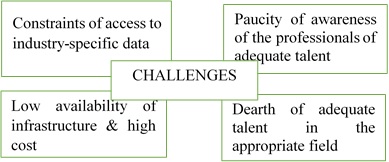
The figure, "Challenges of Implementing AI in Indian Governance," spots key concerns such as lack of awareness, talent shortages, infrastructure gaps, high costs, and skill deficiencies hindering AI adoption.
Fig.1. Challenges of implementing AI in Indian governance
Source: By Authors
Data Privacy & Security
Obtaining the exact computing resources for AI improvement and implementation is often challenging, as it needs technical skills and tools. In India, while cloud framework is growing rapidly, it still descends short of what’s required. This shortage of proper architecture is challenging for startups to adapt AI, driving many to seek for experts abroad. Hence, Indian scientists fail to include on practical experience on location. With finite system at hand, reaching it becomes premium, building on more layer of complication, to acquire AI technologies. (Chatterjee, 2020).
Utilizing AI in the public sector requires managing sensitive confidential data, increasing privacy issues and the perks of violation. Governments must execute strong data security measures and stick to privacy laws. The difficulty lies in stabilizing the need for complete data to teach AI systems with securing citizens' privacy. As Veale features, the emerging use of AI in public services raises issues about gathering only required data and stop "function creep," where data intended for one motive is used for another without genuine oversight (Pulijala, 2024).
Digital Divide
Digital imbalance has become a notable concern in today's societies, mentioning to space in approach, practice, and the successful use of digital resources. These resources, such as business analytics, big data, and artificial intelligence, are important for the transformation to viable societies. Handling digital discrepancies is critical for promoting acceptable, digitalized sections. At a wide level, these discrepancies are together referred to as the digital divide (Vassilakopoulou & Hustad, 2023).
India’s digital inclusion policy aims to expand internet entry in countryside, almost to 70% of the population. Nevertheless, low digital education and inadequate resources put a stop to effective technology use beyond calls and enjoyment. Poor architecture further blocks adoption, making education and enhancing skills important. Nourishing local support can empower rural sections (Laskar, 2023).
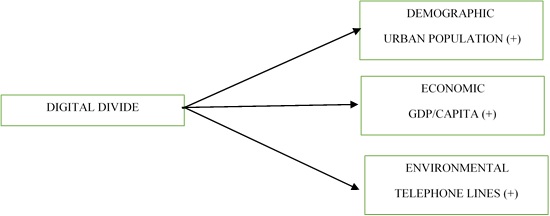
The following figure,” Digital divide in the society” breaks down the digital divide into three influencing factors—economic, demographic, and environmental. It shows how GDP, tech costs, education, and infrastructure affects digital access in society.
Fig.2: Digital divide in the society
Source: By Authors
Infrastructure and Skilled Workforce
Employee training is a process essential for transferring, creating, and retaining the knowledge needed for a firm’s growth. Research has shown that inadequate training for employees can lead to underutilization of new technology solutions. In the context of AI, inefficient training arises from poorly designed programs, ineffective trainers, and the trainees’ inability to apply the training effectively in their roles. This results in decreased motivation among the trainees. For employees to effectively use AI-enabled solutions in a company, proper training is crucial. Insufficient training in using AI tools can have a significant negative impact on the firm (Rana, Chatterjee, Dwivedi, & Akter, 2022).
Algorithmic Bias & Social Implications
Partiality in machine learning refers to the theories made by models, and since ai depends on man-made data, any existing human biases are presented and often expanded. This can be the source for algorithms to support social inequalities or bias. In societies, certain groups may be deprived, resulting in institutional favouritism, where experience favour some groups upon others, often accidently. The accessibility of some data also affects this issue, as some data is easier to examine. Once executed, algorithms can affect power dynamics and societal structures (Ntoutsi et al., 2020).
Cost & Sustainability
The acquisition of AI solutions in industry is set to disturb India’s employment market, notably affecting a large section of the labour force. The decreasing cost of brilliant automation is previously causing the reshoring of industries to emerged economies, making it tough for India to generate jobs through export-oriented production. While this may lead to considerable job losses, it will also upgrade efficiency in many roles. To apply this, there will be an increasing need for better upskilling programs and revised social security policies. Suggested solutions include reallocating measures such as universal basic income and a “robot tax” to label rising variation and potential social disturbance (Gizelis et al., 2022).
Case Studies/Existing Ai Applications in Indian Governance
Artificial intelligence (AI) is rapidly becoming a vital area for policy growth in India. Given the country’s local importance and successful AI sector, it is a critical jurisdiction to scrutinize, no matter where the reader live in. While current policy efforts aim to promote the swift advancement of AI for economic growth and societal benefits, a prevailing trend remains in India, as well as in several other regions: the drawbacks and dangers of data-driven decision-making continue to be considered in retrospect for the creation and implementation of AI applications (Marda, 2018).
Aarogya Setu App: Ai in Pandemic Management.
COVID-19 remains a global challenge, with AI playing a major role together with conventional methods. As part of the Fourth Industrial Revolution, AI has allowed fast identification, followed cases, aided vaccine development, and decreased the pressure on healthcare systems. Contact tracing apps like Aarogya Setu and Trace Together have illustrated the success of AI in restraining transmission. In spite of obstacles in progress and placement, the speed and accuracy of AI systems offer noteworthy benefits. The dynamic use of these technologies by global tech companies highlights AI’s pivotal role (Rajput et al., 2022).
Fastag: Ai and Automation in Toll Collection.
Detecting and analysing vehicles plays a critical role in toll collection and traffic management within smart transportation systems. With progress in artificial intelligence, approaches such as machine learning and deep learning are increasingly being acquired. In some researches, the YOLOv3 model was applied and trained on a custom dataset of vehicle types grouped by the Indian government to allow automatic vehicle identification at toll booths. To improve processing speed, frames were drawn out from test videos at set intervals. The model's execution was assessed across different environments. Unlike conventional systems, YOLOv3 provides a reasonable and adjustable open-source solution (Mishra & Mudgal, 2022).
Ai in Aadhaar System: Benefits and Challenges.
Aadhaar's unification with AI has upgraded service delivery, reduced fraud, and advanced financial inclusion through e-KYC and biometric verification. It speeds up welfare scheme processing and has influenced global initiatives. Although, consolidated data poses security risks, and feeble privacy laws provide finite protection. Biometric failures and administrative errors can deny access to underprivileged groups. Private company involvement raises ethical concerns over data misuse, and Aadhaar's role in mass surveillance is troubling. Its rigid identity system risks excluding diverse communities (Sinha, 2024).
Future Prospects of Ai in Indian Governance
Artificial Intelligence (AI) is confident to exceptionally modify governance in India, providing chances for upgraded efficiency and clarity. This variation is operated by AI is likely to transform different sectors which includes taxation, judicial systems, and public governance (Kapoor, 2020).
Potential Areas of Growth
AI holds potential for implementation across new domains in Indian governance. It can improve the efficiency and precision of taxation through computerized data analysis and fraud detection. In the judiciary, AI can help with case handling, legal research, and predictive analytics, helping reduce case accumulation. Additionally, AI’s role in biodiversity preservation and forest supervision spots its value in environmental monitoring (Shivaprakash et al., 2022).
Collaborations and Innovation
Artificial Intelligence is reshaping service over sectors in India by permitting smarter, more customized experiences in areas like health and finance. As digital revolution advances, AI adoption proceeding to rise, though challenges such as a talent shortage, data privacy issues, and architecture gaps exists. However, government actions like Digital India and AI for All are actively dealing with these concerns enhancing research and encouraging native innovations. These efforts pave the way for AI development and enhancing India’s international competitiveness (Lukose, Budke, & Naidu, 2025).
Discussions
While the preceding sections showcased wide range of AI applications in Indian governance a deeper understanding reveals key themes that needs critical attention.
The Dual Reality of AI
While AI promises efficiency in governance, it risks deepening social divides. Rural communities, non-English speakers and the digitally excluded often face algorithmic partiality and system failures. Aadhaar-based exclusions and defective facial recognition highlight this risk. The benefits of AI are inclined toward urban, English-speaking populations. Without equitable datasets and inclusive design, AI can reinforce systemic injustice. Bridging the digital divide is essential, not just in access, but in fairness and representation. The basic motive of AI in governance is to uplift the marginalized not automate their exclusion.
Lack of Ethical Frameworks
India lacks a central legal framework for ethical AI governance. Departments install AI tools without common responsibilities. This inconsistency weakens transparency and public trust. Citizens remain unaware of how data is used or who’s liable for AI failures. A constitutional, enforceable AI law is crucial to protect rights and uphold justice. Trustworthy AI demands trustworthy policy. India needs to move beyond scattered efforts and start working with one clear, united vision.
Integrating Global Standards with Local Context
India has often adopted AI policies based on Western ideas of ethics and privacy but these don’t always fit our local context. Many of these frameworks assume high digital literacy, strong institutions, and robust data protection all of which aren’t uniformly available here. What we need is a globalised approach that combines global principles with local realities like caste dynamics, multilingual populations, and informal economies. AI governance must be well established in the experiences of ordinary Indians. Local relevance is the foundation of successful policy.
Recommendations
Policy Recommendations:
AI governance must emphasize fairness, accountability and transparency with ethical laws executed through surveys and clear algorithms. Existing regulations like GDPR are inadequate for handling the challenges experienced by AI. Recognizing machine learning models as personal data could strengthen individual control over their information. Legal frameworks must address AI related risks including bias, opacity, and undefined liability, while new legislations should define responsibility for high-risk AI like self-driving vehicles. Civil society must play a role in shaping AI policies to prevent disputes of interest and retain public trust. Ultimately a global, human-centred method is key to ethical and developed AI (Cath, 2018).
Infrastructure Development
Reliable system is critical for effective AI in administration. Finite internet access and resources in developing countries blocks AI services. Expanding cloud systems and smart technologies are necessary. Bengaluru uses AI in traffic control and drones deliver medicines to remote areas. These examples show how proper tech infrastructure improves public services. Governments must also invest in training to manage these systems, creating more efficient, inclusive governance with private sector collaboration (Mhlanga, 2021).
Conclusion
India is at a point where technology mainly AI has the power to convert lives in ways we never anticipated just a few years ago. We've seen glance of this change so far- from AI-powered contact tracing during the COVID-19 outbreak to computerised toll collection systems that save users valuable hours. From helping doctors diagnose illnesses faster, to making it easier for farmers to protect their crops, AI is slowly becoming a quiet partner in our everyday lives.
But while the chances are exciting, we need to make sure no one is left behind. It’s not just about smart systems it’s about ensuring every citizen, irrespective of the language spoken, can benefit from this change. Whether it’s a student in a village learning with AI-driven apps, or a government office using AI to accelerate services the real success of AI will be assessed by how it optimizes lives, not just methods.
The journey forward needs stabilizing creativity with authority. We need systems that are smart to determine tax fraud but also sensitive to protect individual privacy. Algorithms that can detect crop yields while assuring small farmers aren't abandoned. Digital architecture that reaches not just computerised urban centres but also secluded villages where connectivity is still problematic.
With all this power there creates the demand to protect people’s privacy, make fair decisions, and stay transparent about how AI is being used. These aren’t just technical issues they’re deeply human ones.
India’s strength lies in its diversity, and our approach to AI needs to reflect that. We don’t need to chase what other countries are doing we need to build what is appropriate. AI in India should be about more than automation; it should be about understanding people, solving real problems, and building a future that’s smarter as well as tender.
Note: In this paper AI tools were exclusively used for grammar checking and language refinement. No AI-generated content was involved in the creation of research, analysis beyond language corrections.
References:
Abid, S. K., Sulaiman, N., Chan, S. W., Nazir, U., Abid, M., Han, H., ... & Vega-Muñoz, A. (2021). Toward an integrated disaster management approach: How artificial intelligence can boost disaster management. Sustainability, 13(22), 12560.
Akinrinola, O., Okoye, C. C., Ofodile, O. C., & Ugochukwu, C. E. (2024). Navigating and reviewing ethical dilemmas in AI development: Strategies for transparency, fairness, and accountability. GSC Advanced Research and Reviews, 18(3), 50–58.
Almeida, V., Mendes, L. S., & Doneda, D. (2023). On the development of AI governance frameworks. IEEE Internet Computing, 27(1), 70–74.
Bajpai, N., & Wadhwa, M. (2021). Artificial intelligence and healthcare in India (No. 43). ICT India Working Paper.
Cath, C. (2018). Governing artificial intelligence: Ethical, legal and technical opportunities and challenges. Philosophical Transactions of the Royal Society A: Mathematical, Physical and Engineering Sciences, 376(2133), 20180080.
Chatterjee, S. (2020). AI strategy of India: Policy framework, adoption challenges and actions for government. Transforming Government: People, Process and Policy, 14(5), 757–775.
Dafoe, A. (2018). AI governance: A research agenda. Governance of AI Program, Future of Humanity Institute, University of Oxford, 1442, 1443.
Daly, A., Hagendorff, T., Hui, L., Mann, M., Marda, V., Wagner, B., & Wang, W. W. (2022, January 1). AI, governance and ethics: Global perspectives.
Gizelis, C., Nestorakis, K., Misargopoulos, A., Nikolopoulos-Gkamatsis, F., Kefalogiannis, M., Palaiogeorgou, P., Christonasis, A., Boletis, K., Giamalis, T., & Charisis, C. (2022). Decision support using AI: The data exploitation at telecoms in practice. Journal of Decision Systems, 32, 634–652.
Harmon, S., Wilsmann, M., Joshi, G., Ballesteros, A., & Baitinger, P. (2024). Decoding India’s AI governance strategy and its implications for the US-India bilateral relationship. Indian Public Policy Review, 5(4), 51–82.
Jeyakumaran, M., Saravanan, P., & Sundararajan, K. (2025). Revolutionizing education: The impact of artificial intelligence on personalized learning and teacher roles in India.
Kamruddin, S., & Chary, D. T. (2024). The role of artificial intelligence in e-governance: An explorative study. Samriddhi, 110.
Kapoor, S. K. (2020). New face of Indian governance sector with artificial intelligence. IME Journal, 14(1), 97–110.
Kuberkar, S., Singhal, T. K., & Singh, S. (2022). Fate of AI for smart city services in India: A qualitative study. International Journal of Electronic Government Research, 18(2), 1–21.
Kumar, R., Yadav, S., Kumar, M., Kumar, J., & Kumar, M. (2020). Artificial intelligence: New technology to improve Indian agriculture. International Journal of Chemical Studies, 8(2), 2999–3005.
Kumar, A. (2021). National AI policy/strategy of India and China: A comparative analysis. Research and Information System for Developing Countries.
Laskar, M. H. (2023). Examining the emergence of digital society and the digital divide in India: A comparative evaluation between urban and rural areas. Frontiers in Sociology, 8, 1145221.
Lukose, W., Budke, A. S., & Naidu, S. M. (2025). Role of artificial intelligence in service innovation: Challenges and opportunities in Indian context.
Mahajan, S., & Gupta, A. (n.d.). AI-powered policy making mechanism: A framework for smart governance. ISTM Journal of Training Research and Governance, 19.
Mäntymäki, M., Minkkinen, M., Birkstedt, T., & Viljanen, M. (2022). Defining organizational AI governance. AI and Ethics, 2(4), 603–609.
Marda, V. (2018). Artificial intelligence policy in India: A framework for engaging the limits of data-driven decision-making. Philosophical Transactions of the Royal Society A: Mathematical, Physical and Engineering Sciences, 376(2133), 20180087.
Mishra, A., & Mudgal, A. (2022, September). Economic analysis of FasTag on highway toll collection. In International Conference on Transportation Infrastructure Projects: Conception to Execution (pp. 333–344). Singapore: Springer Nature Singapore.
Misra, S. K., Sharma, S. K., Gupta, S., & Das, S. (2023). A framework to overcome challenges to the adoption of artificial intelligence in Indian government organizations. Technological Forecasting and Social Change, 194, 122721.
Mhlanga, D. (2021). Artificial intelligence in the industry 4.0, and its impact on poverty, innovation, infrastructure development, and the sustainable development goals: Lessons from emerging economies. Sustainability, 13(11), 5788.
Nitzberg, M., & Zysman, J. (2022). Algorithms, data, and platforms: The diverse challenges of governing AI. Journal of European Public Policy, 29(11), 1753–1778.
Ntoutsi, E., Fafalios, P., Gadiraju, U., Iosifidis, V., Nejdl, W., Vidal, M. E., ... & Staab, S. (2020). Bias in data?driven artificial intelligence systems—An introductory survey. Wiley Interdisciplinary Reviews: Data Mining and Knowledge Discovery, 10(3), e1356.
Pulijala, S. (2024). Artificial intelligence in governance: Opportunities, challenges, and ethical implications for public administration. International Journal for Multidisciplinary Research.
R, D., & Salman, S. (2023). The present state of artificial intelligence in the Indian legal system and its monitoring. Journal of Legal Studies, 34(12), 21.
Rani, M. (2024). Impacts and ethics of using artificial intelligence (AI) by the Indian police. Public Administration and Policy, 27(2), 182–192.
Rajput, S. K., Patni, J. C., Alshamrani, S. S., Chaudhari, V., Dumka, A., Singh, R., ... & AlGhamdi, A. S. (2022). Automatic vehicle identification and classification model using the YOLOv3 algorithm for a toll management system. Sustainability, 14(15), 9163.
Rana, N. P., Chatterjee, S., Dwivedi, Y. K., & Akter, S. (2022). Understanding dark side of artificial intelligence (AI) integrated business analytics: Assessing firm’s operational inefficiency and competitiveness. European Journal of Information Systems, 31(3), 364–387.
Shivaprakash, K. N., Swami, N., Mysorekar, S., Arora, R., Gangadharan, A., Vohra, K., ... & Kiesecker, J. M. (2022). Potential for artificial intelligence (AI) and machine learning (ML) applications in biodiversity conservation, managing forests, and related services in India. Sustainability, 14(12), 7154.
Sinha, N. (2024). Aadhaar, AI, and identity: Negotiating power and surveillance in the global south. ??????????????? ?????????, 23(4), 80–112.
Ulnicane, I., Knight, W., Leach, T., Stahl, B. C., & Wanjiku, W. G. (2021). Framing governance for a contested emerging technology: Insights from AI policy. Policy and Society, 40(2), 158–177.
Van Noordt, C., & Misuraca, G. (2022). Artificial intelligence for the public sector: Results of landscaping the use of AI in government across the European Union. Government Information Quarterly, 39(3), 101714.
Vassilakopoulou, P., & Hustad, E. (2023). Bridging digital divides: A literature review and research agenda for information systems research. Information Systems Frontiers, 25(3), 955–969.
|
